Welcome to Legal Insights — a place where the law becomes clear, thoughtful, and approachable. Here, we explore legal topics in a structured yet accessible way, sharing knowledge that helps you better understand complex legal systems and real-world cases.
You’ll find in-depth legal insights, practical service guides, and detailed case studies covering areas such as contract law, intellectual property, and landmark Supreme Court decisions.
This platform is for those who seek understanding without intimidation — whether you’re a professional, a student, or simply curious about the law. Take your time, explore the details, and feel confident as your legal knowledge grows with Legal Insights.
Legal Insights also pays attention to the broader meaning of legal developments, helping readers see how laws, court decisions, and legal doctrines influence society, business, and everyday life. By presenting legal information with clarity and context, the journal encourages careful thinking, informed discussion, and a deeper appreciation of how the legal world continues to evolve.
A clear guide to public vs private law in the U.S.: how government power differs from person-to-person disputes, what areas fall under each (criminal, constitutional, administrative vs contracts, torts, family/property), and how procedures, proof standards, remedies, and case control change your strategy.
A practical guide to U.S. corporate law reforms shaping: board governance standards, shareholder rights and universal proxy, executive pay and clawbacks, Corporate Transparency Act reporting, climate/supply-chain accountability, and rising personal liability for directors and officers—plus common compliance mistakes to avoid.
That $40 loss won't justify a $5,000 attorney — but multiply it by 50,000 victims and the math transforms. This guide walks through Rule 23 certification requirements, the two-to-seven-year litigation timeline, opt-out deadlines, how settlement funds get divided, representative plaintiff responsibilities and risks, class actions vs. mass torts, and the common mistakes that cause eligible claimants
Bankruptcy offers a legal fresh start but carries consequences lasting up to ten years on your credit report. This guide walks through the complete process: assessing your financial situation, understanding eligibility including the means test, preparing documentation and required credit counseling, filing the petition and triggering automatic stay protections, navigating the 341 creditor meeting,
Comprehensive guide to shareholder agreement templates covering voting rights, share transfer restrictions, dividend policies, dispute resolution, buy-sell provisions, and corporate governance structures for U.S. corporations, with practical tips to protect ownership interests and prevent internal conflicts.
Real employment discrimination cases reveal how courts rule on firing, harassment, and pay disputes. From the Supreme Court's Bostock LGBTQ+ landmark to multi-million-dollar EEOC settlements, this guide covers protected classes, burden-shifting frameworks, damage calculations, filing deadlines, and the evidence that separates winning claims from dismissed ones.
A patent is a powerful legal tool that grants its holder the exclusive right to make, use, sell, or import an invention for a limited period—typically 20 years from the application filing date. Whether you’re an entrepreneur, an engineer, or an independent inventor, securing a patent can significantly impact your market advantage and financial potential. At its core, a patent protects your intellectual property (IP) from being exploited by c ompetitors, enabling you to recoup research and development costs, generate licensing revenues, and attract investors.
Bad outcomes don't automatically mean malpractice — courts draw strict lines between unfortunate results and compensable negligence. This guide covers all four required legal elements, common claim types from surgical errors to birth injuries, real verdict examples ranging from defense wins to $41.5M awards, damage caps by state, filing deadlines, and how 90% of cases actually resolve.
U.S. privacy litigation accelerated as BIPA biometric claims, CCPA/CPRA statutory damages, tracking-pixel and session replay suits, and dark-pattern enforcement expanded. Learn the most common causes of action, why class certification drives mega-settlements, which industries face the highest risk, and how companies adapt privacy programs to avoid lawsuits.
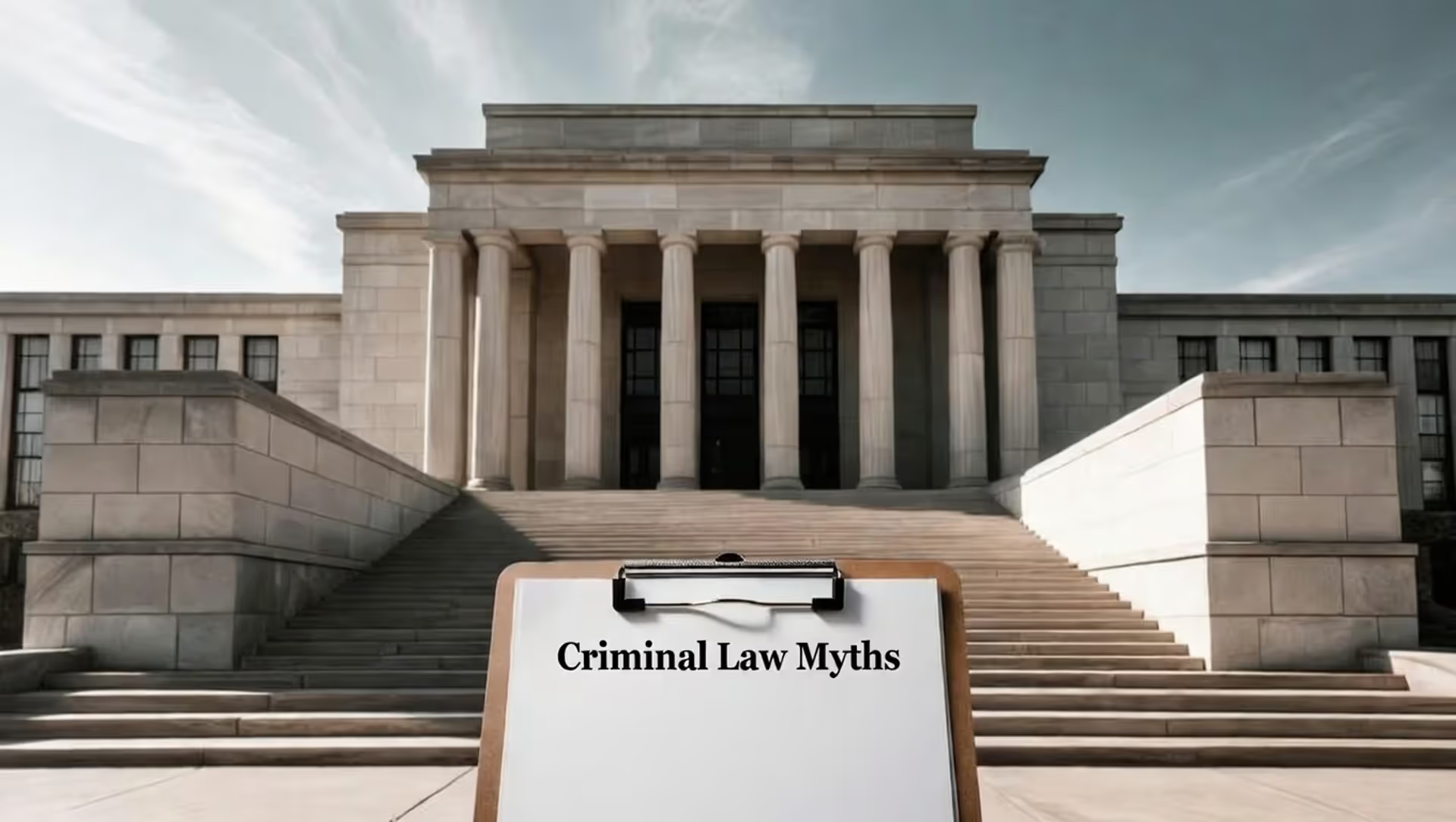
Criminal law is one of the most misunderstood areas of legal practice, with numerous myths and misconceptions shaping public perception. These misunderstandings often stem from dramatized portrayals in media, general misinformation, or a lack of awareness about the intricacies of the legal system. This comprehensive guide addresses the most common misconceptions about criminal law, providing clarity and factual insights to enhance understanding.
Consumer protection enforcement surged, with major FTC and state actions targeting dark patterns, AI-generated marketing, subscription traps, privacy violations, junk fees, and deceptive advertising. Learn how these crackdowns affect refunds, compliance risks, and your rights as a consumer.
Hiring the wrong lawyer can cost more than the legal problem itself. This guide covers every step of selecting the right attorney: understanding eight major leg
Real employment discrimination cases reveal how courts rule on firing, harassment, and pay disputes. From the Supreme Court's Bostock LGBTQ+ landmark to multi-million-dollar EEOC settlements, this guide covers protected classes, burden-shifting frameworks, damage calculations, filing deadlines, and the evidence that separates winning claims from dismissed ones.
A data-driven analysis of U.S. class action trends. Examine filing volumes, state vs. federal court migration, industry exposure, settlement averages, claims rates, biometric and AI litigation growth, and how Rule 23, CAFA, and standing doctrine are reshaping mass litigation strategy for businesses and consumers.
Federal environmental compliance shifted sharply in 2024: stricter PM2.5 standards, mandatory closed-cycle cooling for major intakes, expanded RCRA pharma waste coverage, tougher oil & gas methane monitoring, and broader TRI chemical reporting. Add stricter state rules and faster enforcement, and missed deadlines can trigger major penalties and shutdown risk.
Federal environmental compliance shifted sharply in 2024: stricter PM2.5 standards, mandatory closed-cycle cooling for major intakes, expanded RCRA pharma waste coverage, tougher oil & gas methane monitoring, and broader TRI chemical reporting. Add stricter state rules and faster enforcement, and missed deadlines can trigger major penalties and shutdown risk.
More than half of adults lack a legally valid will — leaving asset distribution to state intestacy laws that may ignore partners, stepchildren, or charitable goals. This guide covers essential legal terminology, choosing the right executor, guardianship provisions for minor children, strategies to minimize heir conflicts, common drafting mistakes that invalidate wills, DIY vs. attorney guidance.
A clear guide to fiduciary duty in U.S. law: what it is, why it’s the highest trust standard, and how loyalty, care, and full disclosure work in real life. Covers trustees, lawyers, corporate directors, executors, and advisors—plus common breach scenarios, remedies, and practical red flags.
A clear guide to public vs private law in the U.S.: how government power differs from person-to-person disputes, what areas fall under each (criminal, constitutional, administrative vs contracts, torts, family/property), and how procedures, proof standards, remedies, and case control change your strategy.
An independent contractor agreement is a legally binding document that establishes the terms under which a business engages a self-employed individual or entity to perform specific services. Unlike employment contracts, these agreements create a business-to-business relationship rather than an employer-employee dynamic.
The distinction matters because misclassification can trigger significant financial penalties. The IRS examines behavioral control (who directs how work gets done), financial control (who manages business aspects of the worker's job), and the type of relationship (contracts, benefits, permanency). Meanwhile, the Department of Labor applies its own tests to determine whether workers qualify for protections under the Fair Labor Standards Act.
Contractor relationship law has evolved substantially. A properly drafted agreement protects both parties by clarifying expectations, limiting liability exposure, and documenting the independent nature of the relationship. For the hiring party, it prevents allegations of employment misclassification. For contractors, it secures payment terms and defines deliverables clearly enough to avoid scope creep.
Consider a software developer hired to build a mobile app. Without a clear agreement, disputes arise: Who owns the code? What happens if the developer misses deadlines? Can the client demand unlimited revisions? An independent contractor agreement answers these questions before work begins, reducing friction and legal risk.
The content on Legal Insights is provided for general informational purposes only. It is intended to offer insights, commentary, and analysis on legal topics and developments, and should not be considered legal advice or a substitute for professional consultation with a qualified attorney.
All information, articles, and materials presented on this website are for general informational purposes only. Laws and regulations may vary by jurisdiction and may change over time. The application of legal principles depends on specific facts and circumstances.
Legal Insights is not responsible for any errors or omissions in the content, or for any actions taken based on the information provided on this website. Users are encouraged to seek independent legal advice tailored to their individual situation before making any legal decisions.