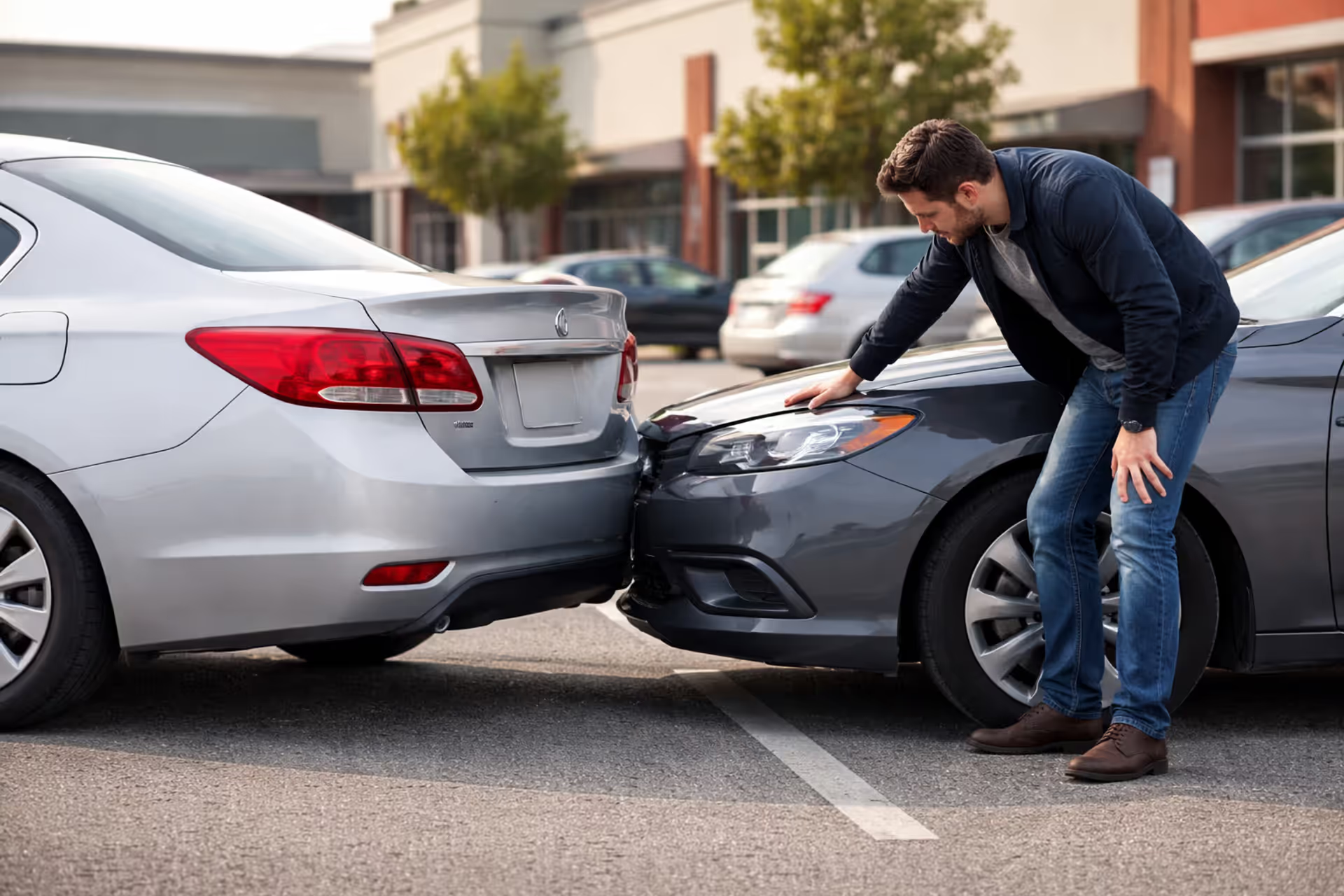
Picture this: you're backing out of a parking spot and accidentally clip another car. Or your dog escapes the yard and bites a jogger. Maybe you're a small business owner and a customer trips over a box you left in the aisle. In each scenario, you've just entered the world of liability—where the law decides who pays for the damage. Whether you're driving to work, running a company, or throwing a party, you're constantly making decisions that could land you on the hook for someone else's medical bills, lost wages, or worse. Let's break down exactly what liability means and how it might affect your wallet.
Defining Liability: When You're Legally Responsible for Harm or Loss
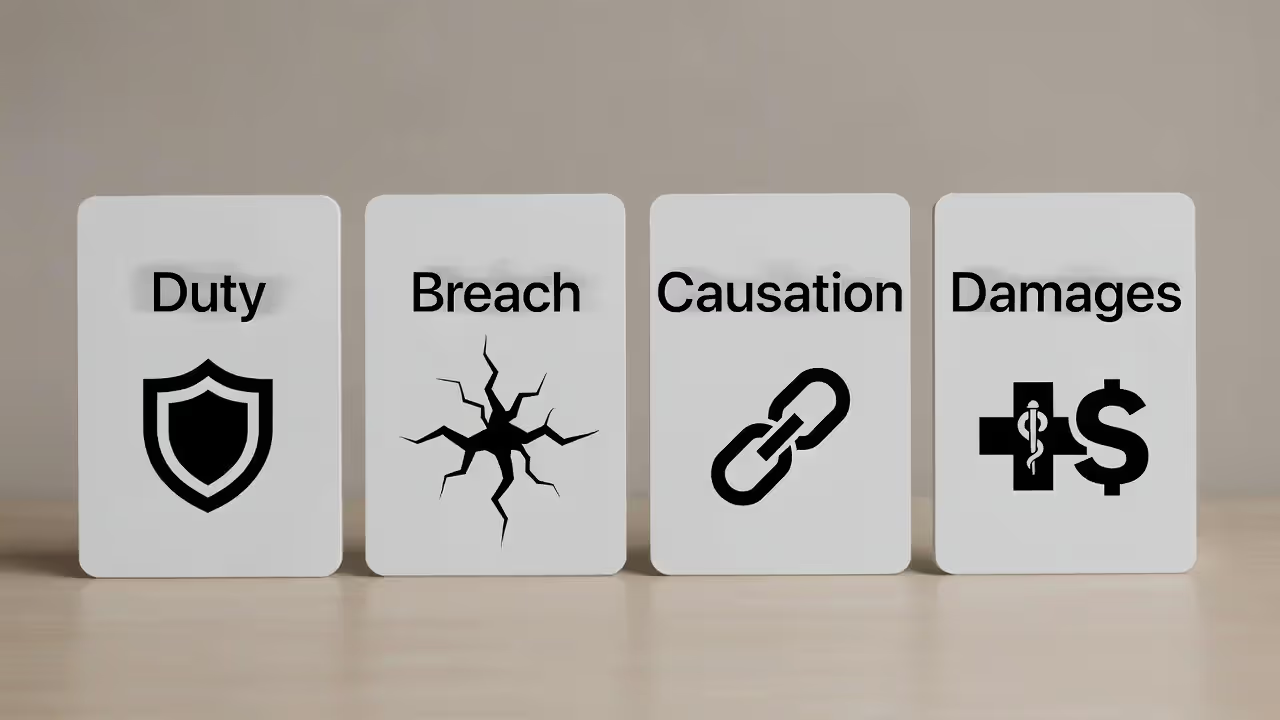
Here's the core idea: liability means you're on the financial hook for someone else's losses. But courts don't just hand out responsibility randomly. They look for four specific pieces before making you pay.
First, you need to have had a duty of care. Think of this as your baseline obligation to not mess things up for other people. Every driver needs to pay attention to the road and follow traffic rules. Store owners need to keep their floors reasonably safe. Doctors need to follow standard medical practices when treating patients. The law creates these duties through statutes, contracts, professional standards, or just the nature of what you're doing.
Here's where things go wrong: you breach that duty. Maybe you glanced at your phone and drifted into another lane. Perhaps you knew about a leak creating a puddle near your store's entrance but figured you'd deal with it later. Or you prescribed medication without reviewing your patient's chart. A breach happens whenever you fall short of what a reasonable person would've done in your shoes.
Author: Michelle Granton;
Source: skeletonkeyorganizing.com
But breaching a duty isn't enough by itself. The law demands causation—a direct line from your screwup to someone's injury. This comes in two flavors: actual cause (your action directly triggered the harm) and proximate cause (the type of harm that occurred was a predictable result of what you did). Say a restaurant owner ignores a broken floor tile for weeks. When a customer catches their shoe on it and breaks an ankle, that's clear causation. But if that same customer later gets food poisoning from a different restaurant, you can't pin that on the broken tile.
Finally, there have to be real damages. We're talking measurable losses: hospital bills, car repairs, paychecks you couldn't earn because you were recovering, ongoing pain you'll deal with for years. Minor annoyances or hurt feelings don't cut it unless they come attached to actual financial or physical consequences.
The Four Main Types of Liability You Need to Know
Author: Michelle Granton;
Source: skeletonkeyorganizing.com
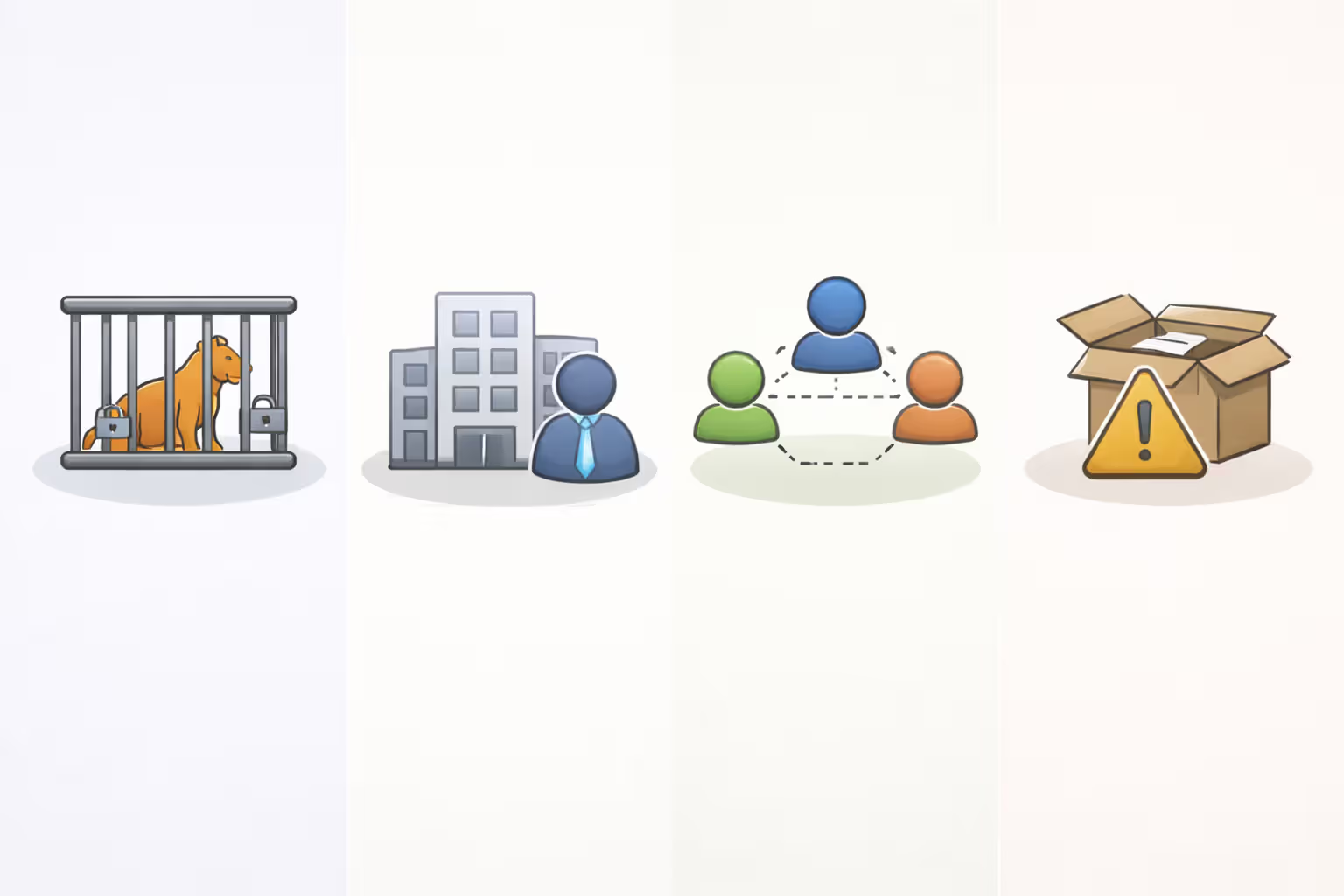
Strict Liability
Here's something that catches people off guard: sometimes you're responsible even when you did everything right. Strict liability means the court doesn't care how careful you were—if your activity or product caused harm, you're paying.
Take exotic pets. Let's say you own a pet tiger and you've built Fort Knox to keep it contained. Motion sensors, reinforced fencing, the works. But tigers are clever, and yours finds a way out. When it attacks your neighbor's livestock, you're liable—period. The court won't listen to your detailed security setup. You chose to keep an inherently dangerous animal, so you accept the consequences when things go sideways.
Product manufacturers face this constantly. Imagine a company makes hedge trimmers. Their factory runs every quality check in the book. But one trimmer leaves the line with a faulty safety switch. When it injures someone, the company can't defend itself by saying "we had great procedures." The defective product itself seals the deal.
Vicarious Liability
This one transfers blame from the person who actually caused the problem to someone else based on their relationship. Employers get hit with this all the time through a principle called respondeat superior—fancy Latin for "let the boss answer."
Your delivery driver runs a red light while making a delivery and T-bones another car. Your company didn't run that light. Your company wasn't even in the truck. But because the driver was doing their job when it happened, you're covering the damages. This rule stops applying when employees go completely off the reservation—if that same driver clocks out and robs a convenience store on the way home, that's their problem alone.
Some states make parents vicariously liable when their kids intentionally damage property or hurt someone, though these laws typically cap the damage at $10,000 to $25,000. Vehicle owners can face vicarious liability too. Hand your car keys to a friend who proceeds to cause a wreck, and many states will look at you to pay up.
Joint and Several Liability
Multiple parties contributed to one person's injuries. Now what? Joint and several liability says the injured person can collect their entire judgment from any single defendant who played a role, regardless of how big or small that role was.
Here's a real-world example: Someone gets hurt in a three-car pileup. Driver A was drunk. Driver B was speeding. Driver C was texting. The injured person wins a $400,000 verdict and the jury assigns fault at 60% to Driver A, 30% to Driver B, and 10% to Driver C. But Driver A has no assets and Driver B only has minimal insurance. Under pure joint and several liability, the injured person can collect the full $400,000 from Driver C—even though they were only 10% at fault—as long as that driver has the money.
Many states have walked this back because it feels unfair to stick one party with everyone's bill. Some now apply it only when you're more than 50% responsible. Others split economic damages (like medical bills) under joint and several rules but make each defendant pay only their share of non-economic damages (like pain and suffering). A handful of states ditched it completely.
Product Liability
When you get injured by something you bought, product liability law decides who compensates you. The potential defendants include everyone in the chain: the manufacturer, parts suppliers, the wholesaler, and even the retail store where you bought it.
Courts recognize three types of defects. Manufacturing defects happen when one item comes out wrong—like a contaminated can in an otherwise safe food production run. Design defects affect the entire product line because something about the fundamental design creates unnecessary danger—think of a certain SUV model that flipped too easily during normal turns. Warning defects mean the product needed better instructions or safety labels—pharmaceutical companies face these claims when they fail to adequately warn about serious side effects.
Let's say you're injured by a power drill with a defective trigger. You might sue the drill manufacturer, the company that made the trigger mechanism, the distributor that got it to stores, and the hardware store that sold it to you. Each defendant then typically files cross-claims against the others to sort out who ultimately pays.
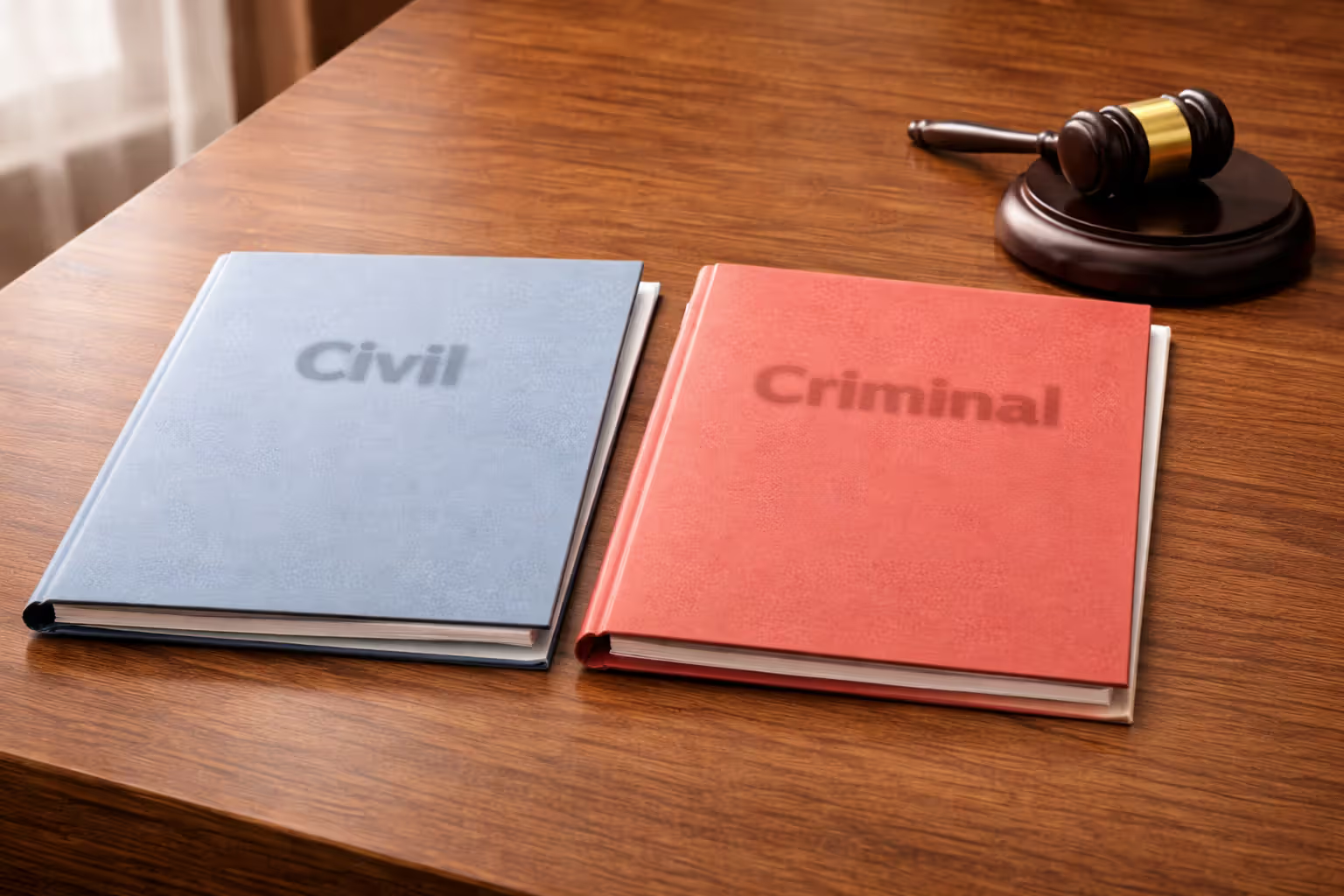
Civil Liability vs. Criminal Liability: Key Differences
Author: Michelle Granton;
Source: skeletonkeyorganizing.com
The same action can land you in two completely different legal systems. A drunk driver who kills someone will face criminal charges from the prosecutor plus a civil wrongful death lawsuit from the victim's family. Here's how these two tracks differ:
Aspect
Civil Liability
Criminal Liability
Who initiates the case
The injured person (plaintiff) files suit
State or federal prosecutors file charges on behalf of the public
Standard of proof required
Preponderance of evidence (plaintiff's version just needs to be more believable—think 51% versus 49%)
Beyond reasonable doubt (jurors must be firmly convinced, around 95%+ certainty)
What you face if you lose
Money damages paid to plaintiff, court orders to do or stop doing something
Jail time, probation, criminal fines paid to government, criminal record
Typical examples
Someone sues over a car accident, contract dispute, medical error
Charges for assault, theft, DUI, murder
Core purpose
Making the injured party whole financially
Punishing wrongdoing and deterring others from similar acts
That burden of proof gap matters enormously in practice. Civil plaintiffs just need to tip the scales slightly in their favor. Criminal prosecutors need to eliminate virtually every reasonable competing explanation for what happened. That's why O.J. Simpson walked free from his murder trial but lost the subsequent civil case—same facts, different standards.
Lose a civil case and you're writing checks. Courts might order you to pay compensatory damages (covering the plaintiff's actual bills and losses), consequential damages (indirect costs that flowed from your actions), and occasionally punitive damages (extra money designed purely to punish outrageous behavior). Lose a criminal case and you could lose years of freedom, along with voting rights, professional licenses, and countless job opportunities.
Civil cases settle constantly because both sides control the outcome. If you and the other party agree on a number, you're done. Criminal cases don't work that way. Even if the victim forgives you and doesn't want prosecution, the government decides whether charges proceed. Prosecutors represent society's interest in punishment and deterrence, which doesn't disappear just because the victim moved on.
The risk reasonably to be perceived defines the duty to be obeyed.
— Benjamin N. Cardozo
How Tort Liability Works in Personal Injury Cases
Most personal injury cases fall under tort law—a civil wrong that injures someone and creates legal responsibility. Torts come in three flavors: negligence, intentional torts, and strict liability torts.
Negligence claims dominate personal injury practice. You've got to prove those four elements we discussed earlier: duty, breach, causation, and damages. The vast majority of car wrecks, slip-and-falls, and medical malpractice cases follow this framework. Nobody meant for bad things to happen—someone just failed to be careful enough.
A driver scrolling through Instagram rear-ends the car ahead at a stoplight. That's negligence. A supermarket employee notices a broken jar of sauce in aisle three, puts a "wet floor" sign in the break room for later, then forgets about it for three hours until someone slips. That's negligence. A physician prescribes a new blood thinner without checking the patient's current medications and causes a dangerous drug interaction. That's negligence.
Intentional torts require proving the defendant meant to do the action that caused harm. Battery means unwanted physical contact. Assault means making someone reasonably afraid they're about to get hit. False imprisonment means trapping someone against their will. Defamation means publishing false statements that damage someone's reputation. A bouncer who shoves a patron and breaks their nose committed battery. A manager who blocks an employee in a back room committed false imprisonment.
Damages compensate for economic losses (medical expenses, rehabilitation costs, lost paychecks, property repairs) and non-economic losses (physical pain, emotional distress, diminished quality of life, relationship impacts). Some states cap non-economic damages, especially in medical malpractice cases—Oklahoma, for instance, limits them to $350,000. Punitive damages punish truly reckless or malicious behavior, though many states limit these to two or three times the compensatory damages.
You're racing the clock from day one. Statutes of limitations give you a limited window to file—blow the deadline and even an airtight case gets dismissed. Most states give you one to three years for general negligence claims, starting when you got hurt. Medical malpractice windows often run shorter—sometimes just one year. The clock sometimes starts when you discover the injury rather than when it occurred, which matters when harm isn't immediately obvious.
Fault-sharing rules dramatically affect your recovery. Pure comparative negligence states let you recover something even if you were mostly at fault—if you're 80% responsible for an accident but suffer $100,000 in damages, you still get $20,000. Modified comparative negligence states (the majority) bar any recovery if you're 50% or 51% at fault, depending on which version your state follows. A few states still follow contributory negligence, which is brutal: if you're even 1% at fault, you get nothing. Alabama, Maryland, North Carolina, Virginia, and Washington D.C. still use this harsh standard.
Common Situations Where Liability Applies
Running a business creates endless liability exposure. Customer injuries from wet floors, food poisoning from your restaurant, harm from defective merchandise—all potential claims. You've also got breach of contract claims, copyright infringement accusations, false advertising complaints, and employee misconduct issues. A café that serves chicken salad that sat out too long faces liability when multiple diners get salmonella. An online retailer selling knockoff designer bags faces claims from both customers and the actual brand owners.
Landlord-tenant relationships come with built-in duties. Landlords must keep properties livable, fix known hazards, and meet building codes. A child develops lead poisoning from deteriorating paint in your rental property? You're likely paying. A guest breaks their leg on your dilapidated porch stairs? Same outcome. Tenants aren't off the hook either—they're responsible for damage beyond normal wear, injuries their negligence causes, and nuisances that disrupt neighbors.
Employment creates liability in multiple directions. Beyond being responsible for what employees do on the job, employers face direct liability for negligent hiring (bringing on someone with a dangerous background for a position where they can cause harm), negligent retention (keeping an employee after learning they're dangerous), and negligent supervision. Workers' compensation systems handle most workplace injuries, but employees can sometimes pursue third parties whose negligence contributed—like equipment manufacturers or contractors.
Car accidents remain the most frequent liability scenario Americans face. Every time you drive, you owe everyone else reasonable care. Following too closely, blowing through stop signs, driving 50 in a 30, texting at the wheel, driving drunk or high—all create liability when crashes result. Most states mandate liability insurance with minimum limits, but those minimums rarely cover serious crashes. Many states still require just $25,000 per injured person—barely enough to cover one night in intensive care.
Professional services trigger specialized liability standards. Attorneys, physicians, accountants, engineers, and architects must meet profession-specific standards of care. A lawyer who misses a statute of limitations deadline, causing a client's case to be dismissed, commits malpractice. An accountant whose errors lead to IRS penalties faces liability. These cases require expert witnesses to explain what the profession demands and how the defendant fell short.
Social host liability catches people by surprise. Serve alcohol to someone who's obviously drunk or to minors, and you might be liable when they hurt someone afterward. State approaches vary wildly. Some states impose broad social host liability. Others limit it to serving minors. Still others don't recognize it at all for private parties (though they do for bars and restaurants). A homeowner who keeps pouring drinks for a guest who can barely stand, who then kills someone in a drunk driving crash, may face a seven-figure lawsuit—though whether the law recognizes that claim depends entirely on which state they're in.
Protecting Yourself: Insurance and Liability Limits
Liability insurance shifts financial risk from you to an insurance company. The insurer pays covered claims within your policy's limits and provides lawyers to defend you—making these policies worth their weight in gold when disaster strikes.
Auto liability insurance is mandatory nearly everywhere (New Hampshire and Virginia are exceptions). Minimum mandated limits look something like 25/50/25—meaning $25,000 maximum per injured person, $50,000 maximum per accident for all injuries combined, and $25,000 for property damage. These minimums prove tragically inadequate for serious collisions. A crash causing paralysis or death easily generates $1 million to $5 million in damages. Carrying only minimum coverage leaves you personally liable for the remainder. Smart drivers carry at least 100/300/100 limits, and preferably 250/500/100 or more.
Risk comes from not knowing what you’re doing.
— Warren Buffett
Homeowners and renters insurance includes personal liability coverage, usually ranging from $100,000 to $500,000. This protects you when guests get injured at your property, when you damage someone else's property, and even covers certain lawsuits like defamation. It won't cover intentional harm, business activities, or vehicle-related claims. A dinner guest who falls down your stairs and requires shoulder surgery will likely find coverage. A customer injured by crafts you sell on Etsy won't.
Business liability insurance takes several forms. Commercial general liability (CGL) addresses bodily injury and property damage from your operations. Professional liability (also called errors and omissions or E&O insurance) covers negligent professional services. Product liability insurance protects manufacturers and sellers. Employment practices liability insurance (EPLI) handles discrimination, harassment, and wrongful termination claims. Most businesses need multiple policies addressing different exposures.
Umbrella policies stack additional liability coverage on top of your underlying policies. A personal umbrella might add $1 million to $5 million in protection that activates once your auto or homeowners liability limits run out. These policies cost surprisingly little (often $200-400 annually for $1 million) because they only pay after you've exhausted substantial underlying coverage. Anyone with assets worth protecting should seriously consider an umbrella policy.
Coverage gaps create dangerous exposure. Homeowners policies exclude business pursuits, so your side hustle selling baked goods at farmers markets isn't covered under your regular policy. Auto insurance excludes commercial use, so driving for Lyft or delivering for DoorDash requires separate commercial coverage. Standard policies exclude intentional acts, so getting into a bar fight won't trigger your personal liability coverage even though the lawsuit technically falls under its scope.
Being underinsured leaves you personally exposed for the difference. A driver carrying minimum 25/50/25 coverage who causes $600,000 in injuries faces personal liability for the $575,000 gap. Plaintiffs aren't just going to shrug and walk away—they'll garnish your wages, slap liens on your property, and seize whatever assets they can reach. Some states protect homestead equity and retirement accounts, but plenty of assets remain vulnerable.
Author: Michelle Granton;
Source: skeletonkeyorganizing.com
Policy limits matter when you're the victim too. An uninsured or underinsured driver who injures you might not have enough coverage to fully compensate your losses. Uninsured/underinsured motorist coverage (UM/UIM) on your own policy bridges this gap, covering damages the at-fault driver's insurance won't or can't pay. Some states mandate this coverage while others make it optional—either way, buying it proves wise.
Frequently Asked Questions About Liability
Can I be held liable even if I didn't intend to cause harm?
Absolutely—and this happens all the time. Negligence claims only require that you failed to use reasonable care and that failure caused injury. Your intent is irrelevant. Accidentally hitting a pedestrian because you were adjusting the radio makes you liable despite zero intent to hurt anyone. Strict liability goes even further by imposing responsibility when you took all reasonable precautions. A manufacturer whose product leaves the factory with an undetected defect is liable even though they followed industry-standard quality control and certainly didn't intend to produce a dangerous item. Only intentional torts—like battery or defamation—require proving you meant to commit the harmful act.
What's the difference between being liable and being sued?
Liability is the actual legal responsibility for harm. A lawsuit is just the formal court process someone uses to establish and collect on that responsibility. You might be liable without facing a lawsuit if the injured person doesn't realize they have a claim, decides not to pursue it, or settles with you informally. On the flip side, people sue others who aren't actually liable all the time—maybe they've misunderstood the facts or the law. That's why we have trials. Getting sued creates stress and expense even when you ultimately win, which makes liability insurance (which pays for your legal defense) incredibly valuable.
How long do I have to file a liability claim in my state?
It varies considerably by state and claim type. Personal injury claims typically allow one to three years from injury date. Property damage claims might give you two to four years. Medical malpractice often has tighter deadlines—sometimes as little as one year from when you discovered (or should have discovered) the malpractice. Contract disputes usually allow four to six years. States sometimes use a "discovery rule" that starts the clock when you discover the injury rather than when it actually occurred—critical for situations like medical errors where harm isn't immediately obvious. Missing your state's deadline permanently destroys even the strongest claim, so checking your specific state's statute of limitations for your particular claim type is essential.
Does homeowners insurance cover personal liability?
Yes, both homeowners and renters insurance include personal liability coverage, typically between $100,000 and $500,000. This covers bodily injuries or property damage you cause to others, pays for your legal defense, and even provides small medical payments to injured guests regardless of who's at fault. Protection applies to incidents at your home and often extends to incidents away from home too. Your dog bites the mail carrier, a guest slips on your icy driveway, or you accidentally knock over an expensive vase at someone's house—your homeowners liability coverage should respond. Major exclusions include intentional harm, business-related activities, auto accidents, and professional services. Read your specific policy to understand exactly what's covered and what's excluded.
Can multiple parties share liability for the same incident?
Yes, and this happens frequently. Car crashes often involve multiple at-fault parties—maybe a drunk driver, the bar that overserved them, a driver who was speeding, and a city that failed to maintain traffic signals properly. Construction accidents might involve the general contractor, multiple subcontractors, an equipment manufacturer, and the property owner. Courts divide up liability among defendants based on each one's degree of fault. Whether you can collect the full judgment from any single defendant or must collect each defendant's proportionate share depends on your state's joint and several liability rules, which vary significantly. Some states apply it broadly, others restrict it to defendants who are mostly responsible, and a few have eliminated it entirely.
What happens if I can't afford to pay a liability judgment?
Judgments don't evaporate when you're broke. Creditors holding judgments can garnish up to 25% of your take-home pay, drain your bank accounts, and place liens on real estate that must be paid when you sell. They can force sales of non-exempt assets to collect what you owe. Certain assets get protection depending on your state: many states protect some home equity through homestead exemptions, retirement accounts often have strong protections, and you can usually keep basic necessities. But plenty remains vulnerable. Judgments typically last 10 to 20 years and creditors can often renew them. Bankruptcy might discharge some judgments, but not those stemming from intentional harm, fraud, or drunk driving incidents. Your best protection is carrying adequate liability insurance before anything happens.
Liability shapes countless decisions you make every day—how carefully you drive, how much insurance you carry, how you run your business, even how you host parties. The consequences of causing harm extend way beyond feeling guilty. They create legal obligations lasting years that can wipe out your savings, your home, and your future earnings. Understanding when liability arises, what forms it takes, and how to protect yourself helps whether you're trying to avoid creating liability or dealing with someone else's negligence.
The complexity here means specific situations often need professional guidance. An attorney can evaluate your circumstances, explain how your state's laws apply, and recommend protective measures. Insurance agents can identify your risk exposures and design coverage addressing your specific needs. These professional consultations cost far less than the judgments and legal fees that follow uninsured liability disasters. Take the time to understand your exposure and address it before something goes wrong—because once you've been served with a lawsuit, your options narrow dramatically.
When someone's wrongful behavior injures you, tort law creates the path to compensation — but miss one of four required elements and your case collapses. This guide covers intentional torts from battery to defamation, negligence claims comprising 90% of tort litigation, strict liability for defective products, compensatory vs. punitive damage calculations, state-by-state filing deadlines, and how
Half of all patent applications die during examination — and most failures trace back to preventable mistakes. This guide walks through pre-filing essentials including prior art searches and documentation, provisional vs. non-provisional strategy, all seven filing steps from drawings to claim drafting, realistic cost breakdowns for micro to large entities, typical 24-36 month timelines, and the c
Mediation puts you in the driver's seat for $2,000-$10,000. Arbitration hands decision-making to someone else for $30,000-$100,000. This guide compares both processes step by step — from session structure and binding rules to appeal rights, confidentiality protections, and hidden costs — then shows exactly when each method works best and why trying mediation first saves money even if it fails.
Every court ruling builds on — or breaks from — what came before. This guide explains stare decisis, the difference between binding and persuasive precedent, how federal and state court hierarchies determine which decisions control, why circuit splits create geographic legal variations, when courts can distinguish or overrule prior rulings, and how attorneys use case law strategically to build win
The content on Legal Insights is provided for general informational purposes only. It is intended to offer insights, commentary, and analysis on legal topics and developments, and should not be considered legal advice or a substitute for professional consultation with a qualified attorney.
All information, articles, and materials presented on this website are for general informational purposes only. Laws and regulations may vary by jurisdiction and may change over time. The application of legal principles depends on specific facts and circumstances.
Legal Insights is not responsible for any errors or omissions in the content, or for any actions taken based on the information provided on this website. Users are encouraged to seek independent legal advice tailored to their individual situation before making any legal decisions.