Here's what most small business owners learn the hard way: that handshake hire who seemed perfect in the interview can turn into your biggest legal nightmare without proper documentation. I've watched countless employers scramble to reconstruct terms after relationships sour, wishing they'd spent an afternoon getting contracts right instead of months in litigation getting them wrong.
Employment agreements do more than just avoid lawsuits—they force you to think through compensation structures, termination scenarios, and confidentiality needs before problems emerge. The difference between an offer letter and a full contract? About 12 pages and several thousand dollars in potential liability.
What Makes an Employment Contract Legally Sound in the US?
Montana stands alone as the only state rejecting at-will employment by default. Everywhere else, you can walk into your office tomorrow and fire anyone without explanation (assuming you're not violating discrimination laws). They can quit just as suddenly. Written contracts flip this script entirely.
Once both signatures hit paper, at-will protections vanish. You've created mutual obligations enforceable in court. Fire someone mid-contract without following your own procedures? Expect a breach lawsuit. The employee who signed agrees to specific responsibilities and often post-employment restrictions they'd never accept in an at-will arrangement.
Contract law 101 requires three components: an offer, someone accepting that offer, and consideration flowing both directions. Consideration just means something valuable changes hands. The employee's work satisfies your end; the job, salary, and benefits satisfy theirs. Lawyers call this a "bargained-for exchange," which sounds fancier than "we both get something we want."
Capacity issues matter more than most employers realize. Hiring a 17-year-old? Their contract might be voidable in many states since minors can disaffirm agreements until reaching majority. Someone signing while intoxicated or mentally incapacitated creates similar problems. This rarely comes up, but when it does, it's spectacular.
When should you actually use written contracts? Fixed-term roles where you need guaranteed availability for a project. Positions involving genuine trade secrets—customer formulas, not just your vendor list. Jobs where you'll invest heavily in training and need commitment in return. Executive roles where negotiated severance and equity matter. If you're just hiring a receptionist for an indefinite period, an offer letter probably suffices.
Federal laws create a floor below which no contract can go. Try drafting an agreement requiring 50-hour weeks at straight pay for a non-exempt worker. Congratulations—you've written an illegal contract. The Fair Labor Standards Act, Title VII, the ADA, and FMLA all impose terms you can't bargain away. Your contract adding protections beyond these minimums? Perfectly fine. Subtracting them? Void on arrival.
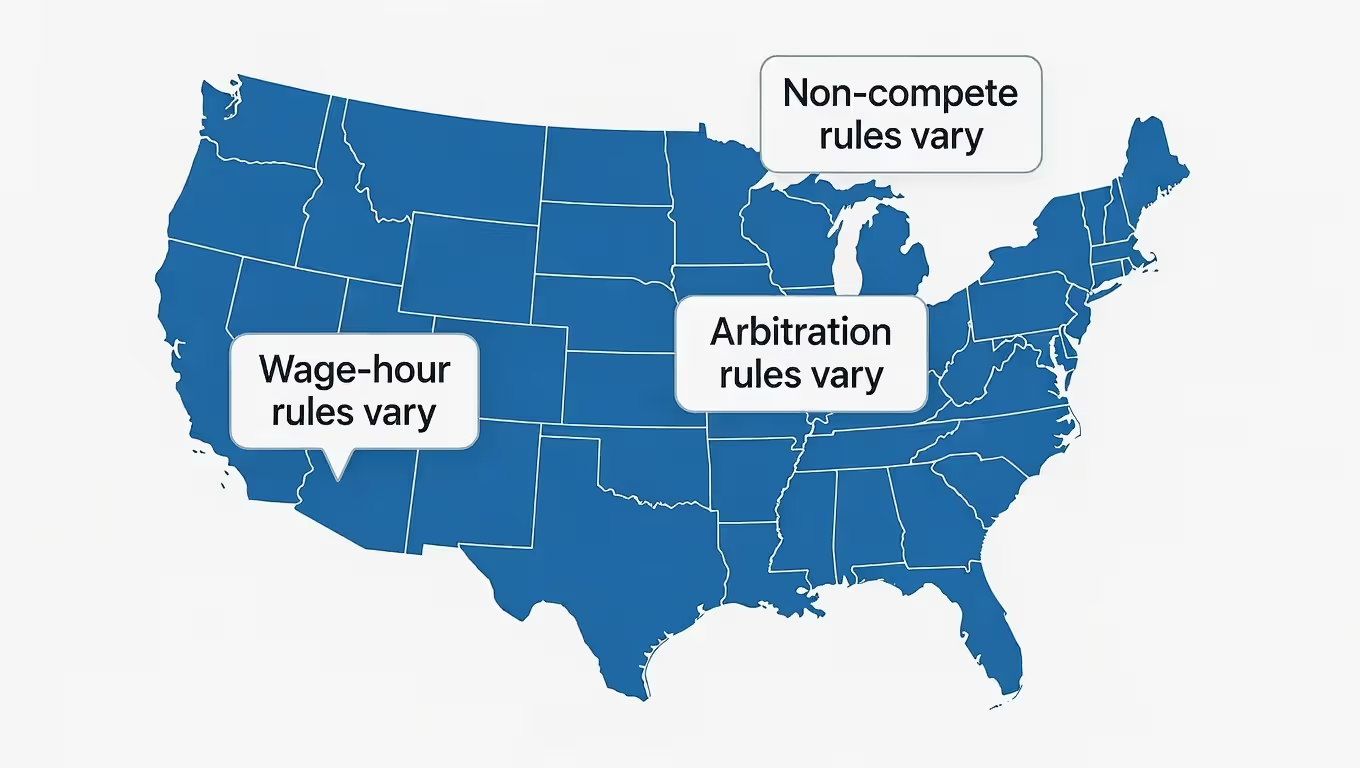
State-by-state variations will make you crazy. Florida judges routinely uphold non-competes lasting two years across multi-state territories. Draft that same clause for a California employee and watch courts laugh it out of the room. Colorado recently joined the non-compete hostile states. Massachusetts requires employers to pay 50% of base salary during the restriction period for non-competes to stick. You need 50 different templates if you're hiring nationally.
Author: Rachel Holloway;
Source: skeletonkeyorganizing.com
Unconscionability gets contracts tossed faster than anything else. Picture a judge reading your agreement and physically recoiling at how one-sided it is. Requiring minimum-wage workers to pay $10,000 if they quit before two years? Unconscionable. Forcing employees to arbitrate in your hometown 2,000 miles from where they live? Probably unconscionable. Making them forfeit wages if they don't give six months' notice? Definitely unconscionable. If it feels grossly unfair when you write it, courts will agree.
Core Components Every Employment Contract Must Include
Start with the boring but essential: both parties' complete legal names, not nicknames or DBAs. Sarah Johnson, not Sally from Accounting. Include the company's full registered name, even if you go by something shorter publicly. Job title goes here too, but pair it with actual duties—"Marketing Manager" tells you nothing until you specify they'll oversee digital campaigns, manage a $200K budget, and supervise two direct reports.
Vague responsibility lists invite disputes. "Other duties as assigned" makes sense in a handbook, not a contract creating binding obligations. Instead: "Develop quarterly marketing strategies, manage vendor relationships for creative services, analyze campaign ROI, present results to executive team monthly, and participate in annual budgeting process." Someone reading this in year three can determine whether they're being asked to do their job or something completely different.
Pin down the start date and any contingencies delaying it. "Employment begins March 15, 2025, subject to satisfactory background check and reference verification" tells everyone where things stand. Remote work muddles location requirements—specify their primary work state for tax and jurisdiction purposes, even if they never visit your office. "Employee will work remotely from their Texas residence; relocation to another state requires written company approval" prevents surprises.
Employment type deserves its own paragraph. Full-time generally means 30+ weekly hours, triggering ACA insurance obligations. Part-time falls below that threshold. Fixed-term specifies an end date—"This two-year contract begins January 1, 2025 and terminates December 31, 2026 unless extended by written agreement." Indefinite continues until someone ends it per termination provisions. Don't make people guess which applies.
An agreement is only as strong as the clarity behind it.
— Stephen R. Covey
Compensation and Benefits Provisions That Prevent Disputes
Write the salary two ways: "$85,000 annually (Eighty-Five Thousand Dollars)" prevents disputes over whether that's $85K or $8,500. State payment frequency explicitly—biweekly means 26 paychecks yearly, semi-monthly means 24. This matters for budgeting and cash flow, especially for employees living paycheck to paycheck.
Hourly workers need their rate spelled out plus overtime methodology. Under FLSA, non-exempt employees get time-and-a-half beyond 40 weekly hours. Some states like California require daily overtime after 8 hours, and double-time Sundays. Your contract should reference the calculation: "Base rate of $32.50/hour; overtime at $48.75/hour for all hours exceeding 40 in a workweek, calculated Sunday through Saturday."
Commission structures breed litigation when left ambiguous. Specify the formula: "5% commission on all sales exceeding quarterly quota of $500K, paid 30 days after customer payment clears, prorated for partial quarters." Address what happens if they're terminated with pending deals—do they get commission on sales that close after departure? Many contracts say yes if the deal was substantially complete during employment.
Bonus clauses cause more arguments than almost anything else. Discretionary bonuses give management complete control but feel arbitrary to employees. Formula-based bonuses (10% of salary if company hits revenue targets) provide certainty but limit flexibility. Hybrid approaches work well: "Annual bonus ranging from 0-20% of base salary depending on individual and company performance, determined by executive team by March 15 following the performance year. Employee must be actively employed on payment date to receive bonus."
Don't duplicate your benefits handbook in the contract—it creates maintenance nightmares when plans change. Instead: "Employee eligible for benefits described in the Company Benefits Guide, including health insurance, dental, vision, 401(k) with 4% employer match, and PTO as outlined in the Employee Handbook, all subject to plan terms and eligibility requirements." This incorporates details by reference without locking you into specifics.
Equity compensation needs either extensive contract language or reference to a separate stock option agreement. At minimum: "Employee granted options to purchase 10,000 shares at $2.50/share under the Stock Option Plan, vesting 25% annually over four years, subject to terms in the Stock Option Agreement executed contemporaneously." The separate agreement handles exercise windows, change-of-control acceleration, and treatment upon termination.
Work Schedule, Hours, and Classification Requirements
Author: Rachel Holloway;
Source: skeletonkeyorganizing.com
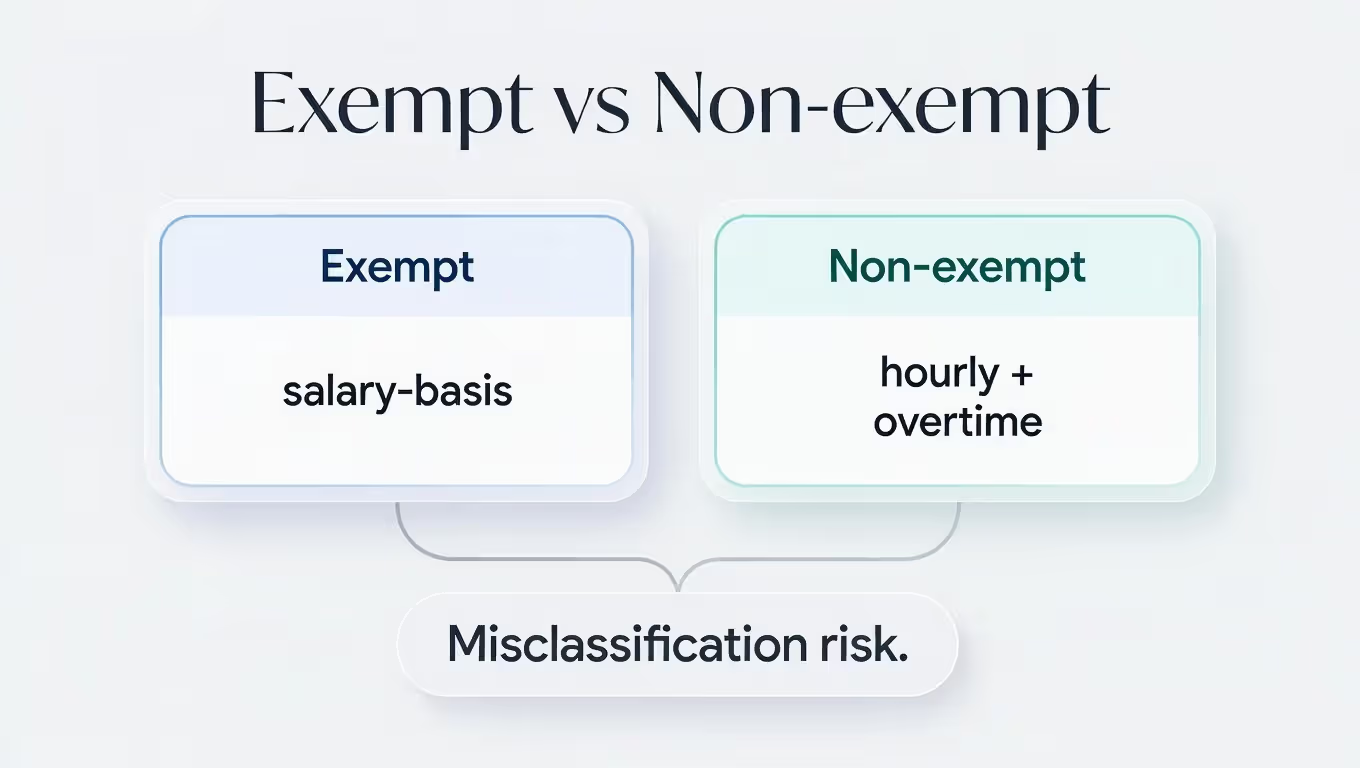
FLSA classification isn't optional—get it wrong and you're paying back wages, liquidated damages, and attorney fees. The stakes jumped significantly when the salary threshold for exempt status rose to $844/week ($43,888 annually), with another increase to $1,128/week ($58,656 annually) scheduled for later this year. Your contract must nail this classification and compensation must meet current thresholds.
Exempt employees need salary-basis language: "Employee classified as exempt under FLSA and will receive $95,000 annually regardless of hours worked, paid in equal biweekly installments." Non-exempt language looks different: "Employee classified as non-exempt under FLSA and will receive $28/hour for all hours worked, with overtime at $42/hour for hours exceeding 40 weekly." The distinction matters for wage-hour audits.
Even exempt workers benefit from defined core hours. "Standard business hours are 9 AM to 6 PM Eastern Time, Monday through Friday, with flexibility for occasional remote work and schedule adjustments as business needs allow" sets expectations without creating overtime obligations. Remote workers across time zones need explicit language: "Employee maintains East Coast working hours despite Pacific location to ensure team collaboration."
State break laws vary wildly. Federal law doesn't mandate breaks at all, but California requires ten-minute rest breaks every four hours and 30-minute meal breaks for shifts over five hours. New York demands similar accommodations. Colorado just passed detailed rest break requirements. Rather than listing state rules (which change), reference them: "Employee entitled to meal and rest breaks as required by Texas law and company policy."
Clause Category
Legal Status
What It Accomplishes
Consequences of Omission
Party names and role definition
Mandatory
Establishes who's bound and their capacity
Entire agreement may fail; role confusion breeds disputes
Pay structure and amount
Mandatory
Prevents wage claims; satisfies FLSA requirements
Department of Labor violations, back pay liability, employee lawsuits
Employment start date and work location
Mandatory
Defines when duties begin; establishes legal jurisdiction
Status ambiguity; conflicts over which state's laws apply
Exempt vs. non-exempt designation
Mandatory
Controls overtime obligations
Misclassification penalties from DOL audits; class-action exposure
Zero protection against employee starting rival business
Mandatory arbitration
Situational
Diverts claims from courts to private arbitration
Higher litigation costs; public jury trials instead
Moving expense coverage
Situational
Defines relocation reimbursement amounts
Confusion over what's covered; surprise expense claims
How to Structure Termination and Severance Clauses
Author: Rachel Holloway;
Source: skeletonkeyorganizing.com
Termination sections convert your at-will flexibility into contractual rigidity—for better and worse. You're trading the freedom to fire at will for protections against wrongful termination claims. The trade-off works when properly structured.
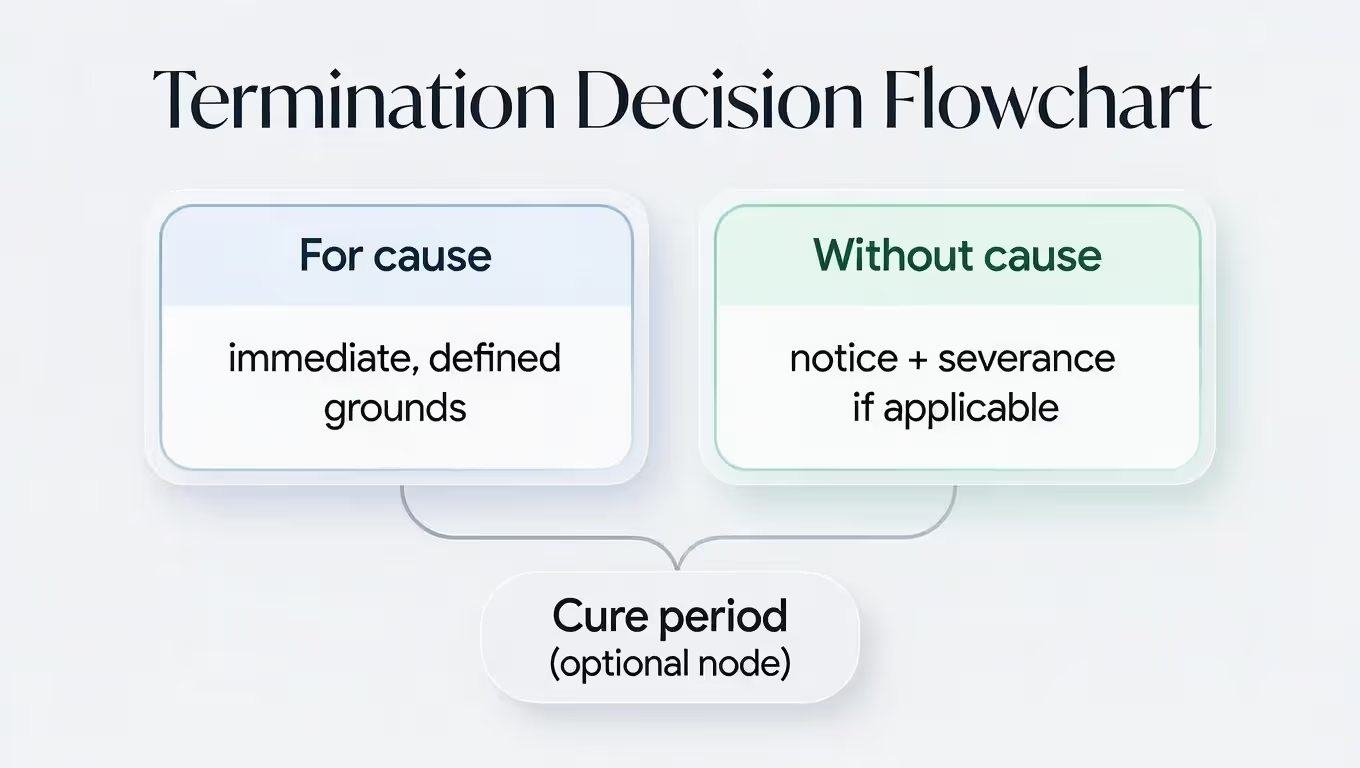
Distinguish between for-cause and without-cause termination clearly. For-cause typically requires serious misconduct justifying immediate dismissal: embezzlement, assault, repeated no-shows, criminal conviction relating to job duties, or gross insubordination. List specific grounds rather than catch-all phrases. "For-cause termination may occur upon: (a) theft or fraud, (b) three unexcused absences within 90 days, (c) willful policy violations after written warning, (d) conduct resulting in criminal conviction, or (e) breach of confidentiality obligations."
Without-cause termination gives either party an exit without proving wrongdoing—you're just required to follow notice procedures and possibly pay severance. This protects employees from arbitrary firing while letting you end relationships that aren't working. The magic is in the notice period and severance link.
Notice requirements balance both parties' interests. Requiring employees to give two weeks before resigning gives you transition time. Offering them 60 days' notice before termination lets them job-hunt while employed. Garden leave provisions—paying them through the notice period without working—prevent vindictive behavior and information theft during the exit window.
Severance isn't mandatory under federal law except in mass layoffs under the WARN Act (60 days' notice or pay for closures/layoffs affecting 50+ workers). But contract promises create obligations. Smart severance clauses tie payment to signed releases: "Upon termination without cause, Employee receives one week's base pay per year of service (maximum 26 weeks), payable in biweekly installments, contingent upon signing a general release of claims within 21 days."
Executive contracts include change-of-control provisions protecting leaders when companies get acquired. "Double-trigger" acceleration works best: equity vests early only if both (1) a change of control occurs, AND (2) the employee is terminated within 12 months afterward. This prevents windfalls for executives who stay and thrive under new ownership while protecting those pushed out.
Post-employment obligations extend beyond termination. Confidentiality duties continue indefinitely for true trade secrets. Non-solicitation restrictions typically last 12-24 months, preventing former employees from recruiting your customers or staff. Return-of-property provisions require immediate surrender of laptops, phones, keys, access cards, documents, and data—specify "within 24 hours of termination" so nobody claims they forgot equipment at home for three weeks.
Non-compete clauses face intense judicial scrutiny. Courts ask three questions: (1) Does the employer have legitimate protectable interests? (2) Is the restriction reasonably limited in time, geography, and scope? (3) Does it impose undue hardship on the employee? A national one-year restriction for a sales rep covering three counties? Unenforceable. A 12-month, 50-mile restriction for a regional manager with customer relationships throughout that territory? Probably reasonable.
State law varies dramatically. California essentially bans non-competes outside business sale contexts. Colorado caps them at two years for employees earning over $101,250. North Dakota and Oklahoma rarely enforce them. Massachusetts requires paying 50% of salary during the restriction period. Check your state's current rules—this landscape changes constantly as legislatures respond to worker-mobility concerns.
Protecting Your Business: Non-Compete, Confidentiality, and IP Clauses
Author: Rachel Holloway;
Source: skeletonkeyorganizing.com
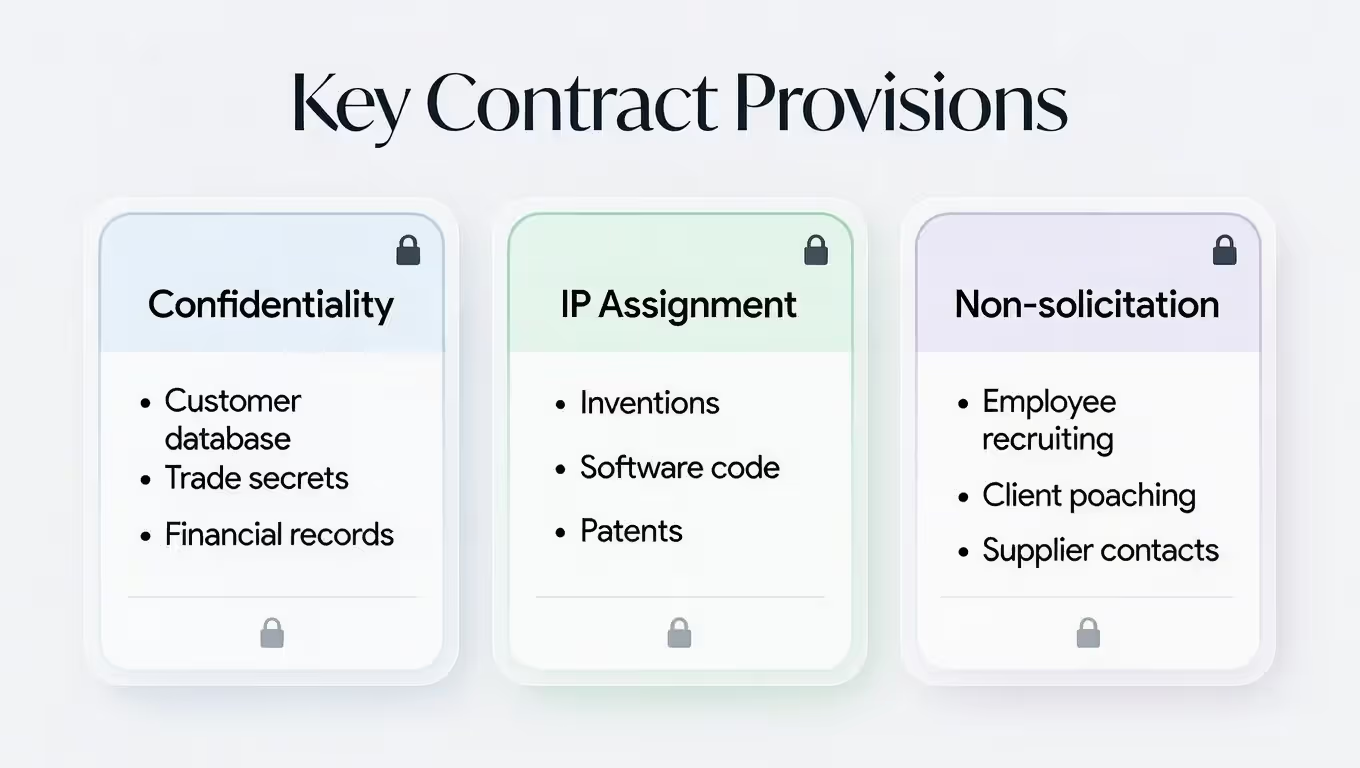
Confidentiality provisions protect information giving you competitive advantage: customer databases, pricing algorithms, product roadmaps, supplier terms, financial projections, and manufacturing processes. Define what's confidential broadly but exclude obvious categories: information already public, independently developed by employee, or legally disclosed under subpoena.
The Defend Trade Secrets Act (federal law passed in 2016) requires specific notice language or you lose certain remedies. Include verbatim: "Employee acknowledges notice under 18 USC § 1833(b): An individual shall not be held criminally or civilly liable under any Federal or State trade secret law for disclosure of a trade secret that (A) is made (i) in confidence to a Federal, State, or local government official, either directly or indirectly, or to an attorney; and (ii) solely for the purpose of reporting or investigating a suspected violation of law; or (B) is made in a complaint or other document filed in a lawsuit or other proceeding, if such filing is made under seal."
IP assignment clauses ensure you own work created during employment. Without this language, employee-invented software, product designs, or creative content might belong to the inventor, not your company. "Employee assigns to Company all right, title, and interest in any invention, discovery, improvement, process, technique, or work of authorship created (a) using Company resources, (b) during working hours, (c) relating to Company's business, or (d) resulting from work performed for Company."
Several states limit IP assignment scope. California Labor Code § 2870 protects employee inventions developed entirely on their own time, without company equipment, and completely unrelated to employer business. Washington, Minnesota, and several others have similar statutes. Include acknowledgment language: "This assignment excludes inventions qualifying for protection under [state statute], specifically those developed entirely on Employee's own time without Company resources and unrelated to Company business."
Non-solicitation provisions come in two flavors. Customer non-solicitation prevents targeting clients the employee served during employment: "For 18 months following termination, Employee will not solicit, contact for business purposes, or accept business from any customer Employee directly served during the final two years of employment." Employee non-solicitation stops poaching: "For 12 months post-termination, Employee will not recruit, solicit, or hire any Company employee or encourage any employee to leave employment."
Enforcement language makes restrictions credible. Some contracts require employees to notify you when competitors offer them jobs, triggering your chance to seek injunctive relief before they start. Liquidated damages provisions specify dollar amounts owed for violations—though courts treat these skeptically if they're really penalties in disguise. Attorney fee clauses letting prevailing parties recover legal costs encourage compliance: "In any action to enforce this Agreement, the prevailing party recovers reasonable attorney fees and costs."
Common Mistakes That Invalidate Employment Contracts
Author: Rachel Holloway;
Source: skeletonkeyorganizing.com
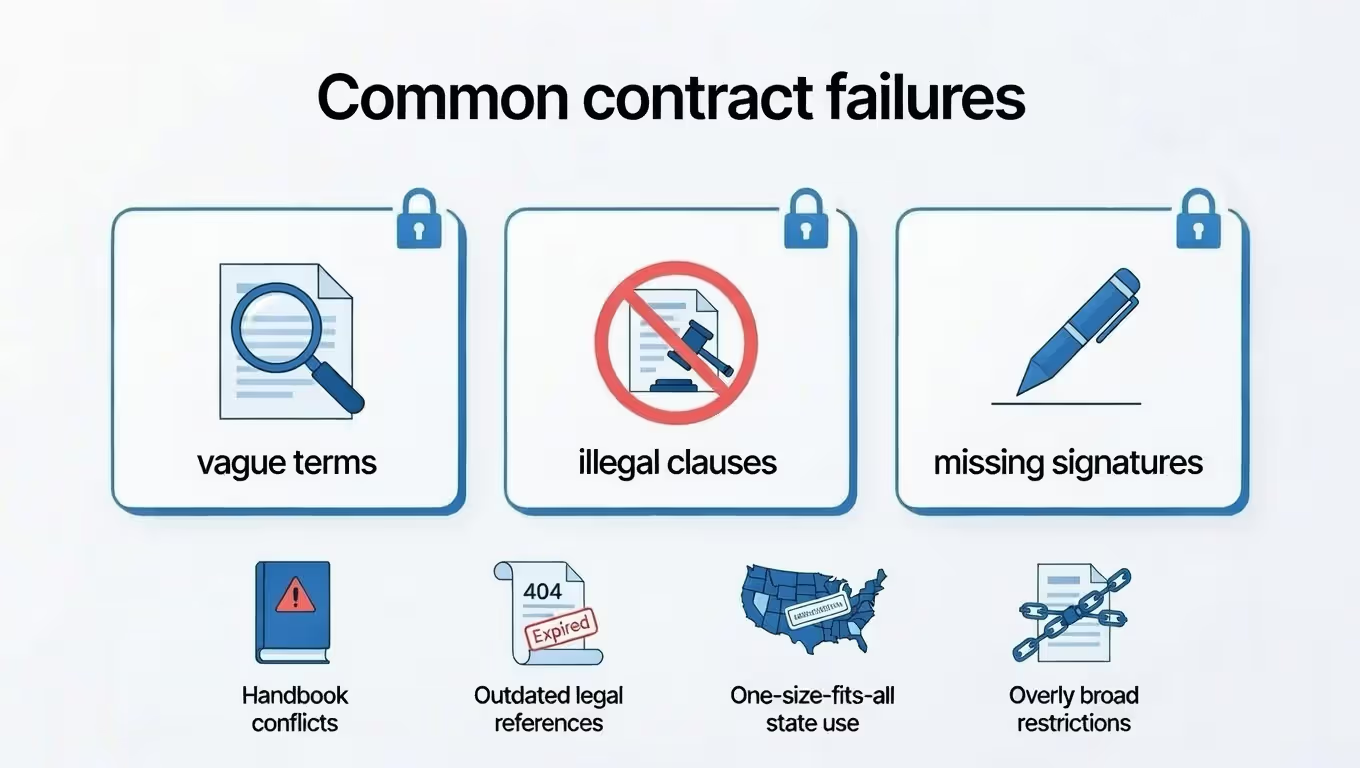
Vague language destroys contracts faster than outright illegality. Terms like "competitive compensation" or "standard benefits" mean nothing enforceable. One party thinks competitive means 75th percentile, the other thinks 50th. Judges interpret ambiguous language against whoever drafted it—that's you. Use specific numbers, dates, and concrete obligations.
Illegal provisions sometimes void entire contracts, not just the offending clause. Attempt to contract around minimum wage: illegal. Require forfeiting workers' comp claims: illegal. Demand employees waive overtime: illegal. Include language about "unpaid training hours" for non-exempt workers: extremely illegal. Courts view attempts to include unenforceable terms as evidence the entire agreement is suspect.
Missing signatures seem obvious but happen constantly. Both parties must sign; date it; keep copies. Electronic signatures via DocuSign or similar platforms satisfy E-SIGN Act requirements if both parties consent to electronic transactions. Store signed copies permanently—you'll need them when someone files a lawsuit five years later claiming they never agreed to arbitration.
Contradictions between employment contracts and handbooks create ambiguity courts will exploit. Your handbook says employment is at-will and can end without notice. Your contract requires 60 days' written notice before termination. Which controls? Maybe the contract, maybe the handbook's more recent provisions, maybe neither because the contradiction renders both unenforceable. Include explicit language: "This Agreement supersedes all prior agreements and understandings. In case of conflict between this Agreement and the Employee Handbook, the Agreement controls regarding compensation and termination; the Handbook controls regarding workplace policies and benefits."
Outdated compliance references signal neglect and create liability. Referencing the wrong FLSA salary threshold (it's changed multiple times recently), citing superseded FMLA regulations, or mentioning obsolete state laws tells courts you haven't maintained your templates. Review annually and update dated references. Better yet, reference "current federal law" rather than specific dollar amounts that become stale.
State-specific requirements get ignored by multi-state employers using one-size-fits-all templates. Your boilerplate works great in Texas but includes unenforceable non-competes for California hires. It's missing mandatory sexual harassment training references New York requires. You've specified Missouri law governs disputes despite employing people in six states. Create state-specific versions or at minimum have counsel in each jurisdiction review your template before use.
Overly broad restrictions invite judicial red-lining or complete rejection. A non-compete preventing "any employment in healthcare" across "North America" for "five years" after a medical assistant quits? Laughable. Courts will either narrow it to something reasonable (blue-penciling) or toss it entirely. Tailor restrictions to actual competitive threats. Your customer service rep doesn't need the same non-compete as your head of product development.
Customizing Your Template for Different Employee Types
Author: Rachel Holloway;
Source: skeletonkeyorganizing.com
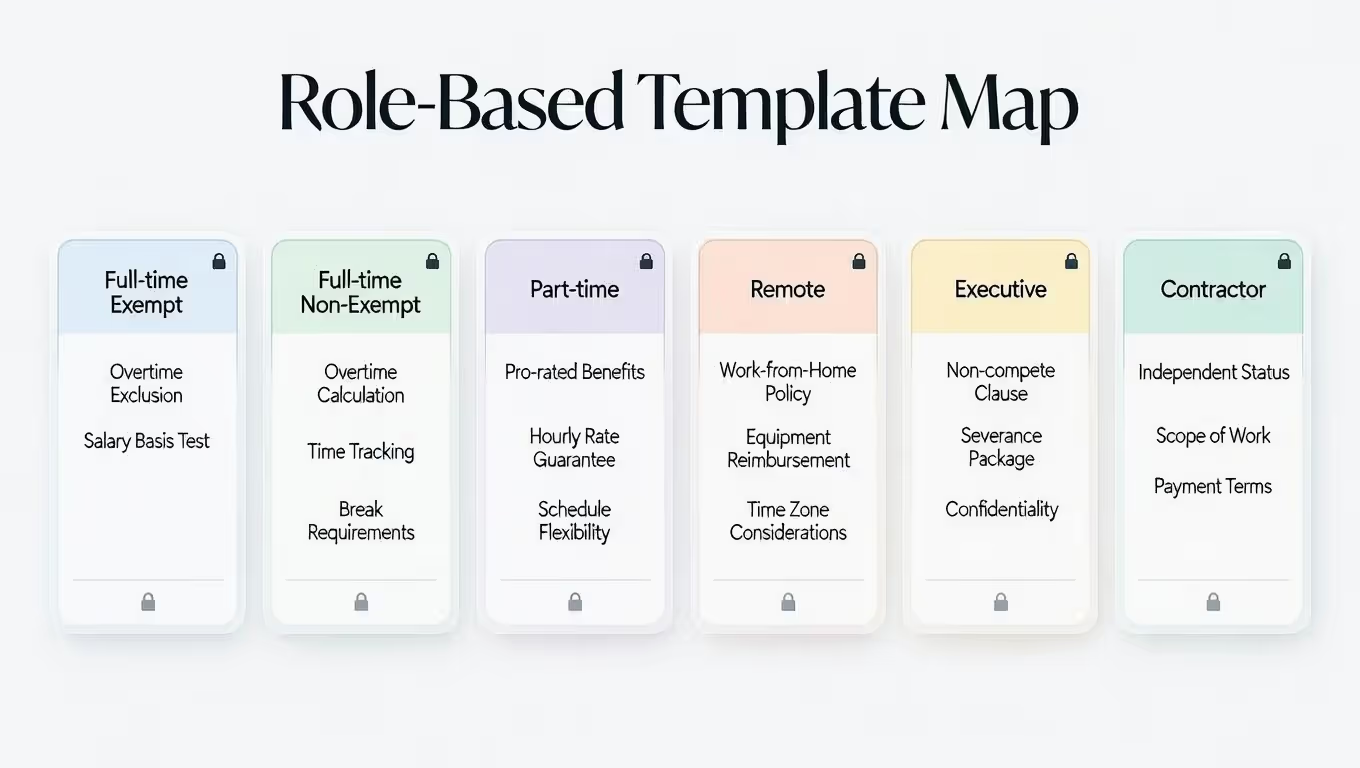
Full-time exempt employees receive comprehensive contracts spanning 10-15 pages covering compensation, equity, benefits, confidentiality, termination procedures, and post-employment restrictions. These workers are your management team, professionals, and key technical staff. They qualify for FMLA leave after one year and 1,250 hours worked, so acknowledge these rights explicitly even though you can't waive them.
Part-time workers need clarity about hour expectations and benefit cutoffs. "Employee scheduled for approximately 25 hours weekly; actual hours may vary based on business needs. Employee ineligible for health insurance, 401(k) matching, and bonus programs; receives prorated PTO at 0.625 hours per week worked." Non-exempt part-timers still get overtime for hours over 40 weekly despite part-time status—a common misconception.
Exempt vs. non-exempt classification fundamentally changes contract focus. Non-exempt agreements emphasize hourly rates, timekeeping obligations, overtime calculations, and meal break requirements. Exempt contracts focus on annual salary, performance expectations, and results rather than hours. Both must explicitly state FLSA classification—don't make employees guess which rules apply.
Remote workers demand additional provisions addressing work location flexibility, equipment provision, expense reimbursement, and data security. "Employee works remotely from home office in Colorado; Company provides laptop, monitor, and software licenses; Employee responsible for internet connectivity costs; Employee may not work from public WiFi networks when accessing confidential information." If they move states, employment may need to terminate and restart under that state's laws due to tax and regulatory compliance.
Remote work creates surprising compliance issues. An employee working from New Jersey for your New York company triggers New Jersey income tax withholding, unemployment insurance, and employment law obligations. Your workers' comp carrier needs notification. You might owe business taxes in New Jersey. Specify approved work locations explicitly and require written approval before relocating: "Change of primary work location to another state requires 30 days' advance notice and Company approval; Company may terminate employment if relocation is not approved."
Independent contractors should never receive employment contracts—they get contractor agreements emphasizing the independent nature of the relationship. Contractors control when and how work is performed, use their own tools and equipment, serve multiple clients simultaneously, and bear business risk. Call someone a contractor in your agreement while treating them like an employee (setting their hours, providing equipment, prohibiting other clients)? The IRS and DOL will reclassify them as employees, sticking you with back taxes, penalties, and benefit obligations. Economic reality controls, not contract labels.
Executive-level agreements deserve enhanced provisions reflecting their elevated responsibility and leverage. Multi-year terms provide job security beyond at-will employment. Change-in-control provisions protect executives if the company sells—"If Company undergoes change in control and Employee is terminated without cause within 12 months thereafter, all unvested equity immediately vests and Employee receives 18 months' base salary plus target bonus as severance." Equity grants with accelerated vesting align executive interests with long-term shareholder value.
C-suite contracts include provisions unnecessary for other employees: detailed performance metrics tied to bonus multipliers, expense account parameters, club memberships, first-class travel for trips exceeding three hours, executive coaching allowances, and financial planning services. Non-competes typically extend 24 months and span broader geographic territories reflecting executives' wider influence. Severance multiples run higher—12-18 months base plus bonus is standard for departing executives versus 2-8 weeks for individual contributors.
Vague change-in-control provisions; weak non-compete language for mobile executives
Independent contractors
Separate services agreement, not employment contract
Deliverables, payment milestones, work product ownership, true independence factors
Misclassifying employees as contractors; controlling work methods despite contractor label
FAQ: Employment Contract Template Questions
Can I use the same employment contract template for all states?
Not unless you enjoy getting sued. State employment laws differ dramatically—what works in Texas gets laughed out of court in California. Non-compete enforceability varies from routine (Florida, Texas) to nearly impossible (California, Colorado). Colorado now requires paying half the employee's salary during any non-compete period. Massachusetts demands the same. New York added mandatory sexual harassment policy language. Illinois recently restricted non-compete scope for workers earning under $75,000. Create separate templates for states where you regularly hire. At bare minimum, have an employment attorney licensed in each jurisdiction review your form before using it there. Choice-of-law provisions ("Texas law governs this contract") sometimes work, but courts often ignore them when they conflict with the employee's actual work state.
What's the difference between an offer letter and an employment contract?
Offer letters run 1-2 pages hitting the highlights: job title, start date, salary, benefits eligibility, and at-will employment language preserving everyone's right to terminate anytime. They're acknowledgments of basic terms, not comprehensive agreements. Employment contracts span 10-20 pages overriding at-will status with detailed termination procedures, restricting post-employment activities, assigning intellectual property, protecting confidential information, and creating binding obligations neither party can walk away from without consequences. Use offer letters for routine hires where at-will employment suits everyone. Reserve formal contracts for executives you're locking in for fixed terms, employees accessing genuine trade secrets, roles involving significant training investment requiring commitment, and positions where post-employment restrictions matter. Many employers use offer letters for 90% of hires and contracts for the other 10%.
Do I need a lawyer to review my employment contract template?
Yes, especially initially. Employment law changes constantly and varies by state. Penalties for violations range from uncomfortable (back pay) to company-threatening (class actions, DOL investigations, criminal charges in extreme cases). Budget $2,000-$6,000 for an employment attorney to create a solid template covering federal requirements and your state's specific rules. Once you've got a compliant template, reuse it for similar positions with minor tweaks. Schedule annual reviews to catch legal changes—the FLSA salary threshold alone has bounced around repeatedly in recent years. For executive hires or unusual situations, individual legal review justifies the cost. Paying $1,500 for contract review beats paying $150,000 to settle a misclassification lawsuit. If you're genuinely cash-strapped, at least have counsel review one template you'll adapt for all positions rather than winging it based on internet forms.
How often should employment contracts be updated?
Review templates annually at minimum. Employment law changes constantly— alone brought FLSA salary threshold increases, multiple states restricting non-competes, pay transparency requirements in eight new states, and marijuana accommodation laws in several jurisdictions. Major business changes should trigger immediate review: expanding to new states, creating new position categories, changing benefit structures, or getting acquired. Update individual existing contracts only when material terms change like promotions, significant raises, or role modifications requiring new restrictions. You generally can't unilaterally modify signed contracts—changes need mutual agreement. Some employers include amendment clauses allowing modifications with written notice, but courts scrutinize these heavily for unconscionability. Safer approach: acknowledge existing contracts continue under original terms while using updated templates for new hires.
Can an employee negotiate terms in a standard contract template?
Absolutely, and good candidates will. While you present a standard form, employees can request modifications before signing. Common negotiation points include start date flexibility, base salary, bonus structure and targets, equity grant size and vesting acceleration, remote work arrangements, vacation time beyond standard allotment, and severance provisions. Executive candidates routinely negotiate non-compete scope, duration, and geographic limits. You're never obligated to accept counterproposals, but refusing all negotiation alienates strong talent. Build flexibility into hiring budgets and approval processes so you can respond to reasonable requests. Some terms aren't negotiable—FLSA compliance, anti-discrimination provisions, required legal language—but most business terms are fair game. Document negotiated changes in writing, with both parties initialing modifications, and attach them to the standard form. Never rely on verbal side agreements that contradict written terms.
What happens if my contract contradicts my employee handbook?
Courts spend considerable time untangling this mess. Generally the more specific document controls—the individual contract beats the general handbook because it reflects negotiated terms between two parties rather than company-wide policies. However, some courts have found handbook promises enforceable as implied contracts, especially regarding progressive discipline procedures and termination-only-for-cause language. Several approaches prevent conflicts. First, include explicit language: "This Employment Agreement supersedes all other agreements, representations, and understandings. Where this Agreement conflicts with the Employee Handbook, this Agreement controls regarding compensation, equity, termination, and post-employment restrictions; the Handbook controls regarding workplace conduct, benefits administration, and day-to-day policies." Second, reference the handbook by incorporation rather than duplicating it: "Employee entitled to benefits described in the Company Benefits Guide as amended from time to time." Third, keep language consistent between documents—if your contract promises progressive discipline before termination, your handbook shouldn't say employment is at-will and may end immediately for any reason.
Getting employment contracts right requires balancing legal protection with practical flexibility and competitive positioning. A properly structured agreement prevents misunderstandings about compensation, clarifies performance expectations, protects confidential information through enforceable restrictions, and establishes predictable procedures for ending relationships professionally. Templates save considerable time but need customization for different roles, geographic locations, and strategic business needs.
Review contracts with qualified employment counsel before deployment, update them regularly as laws evolve, and maintain signed copies in secure personnel files for the entire employment relationship and at least three years beyond. The few hours spent getting these documents right upfront prevents exponentially more time and money spent on wage claims, misclassification audits, trade secret litigation, and wrongful termination disputes later. Whether you're making your first hire or your five-hundredth, treating employment contracts as strategic documents rather than administrative formalities pays dividends throughout the employment lifecycle and well beyond termination.
A vague scope clause turns "marketing services" into a $20,000 dispute. This guide breaks down every essential service agreement component — from scope of work and acceptance criteria to five payment models, termination provisions for cause and convenience, liability caps, IP assignment language, confidentiality terms, dispute resolution tiers, independent contractor status, and a complete section
Nearly 70% of business partnerships lack formal written agreements — and fail at dramatically higher rates. This guide covers four elements of enforceability, capital contribution documentation, profit-sharing models with formula examples, tiered decision-making structures, buy-sell valuation methods, non-compete clauses, common drafting mistakes that invalidate agreements, and a customizable temp
Comprehensive guide to shareholder agreement templates covering voting rights, share transfer restrictions, dividend policies, dispute resolution, buy-sell provisions, and corporate governance structures for U.S. corporations, with practical tips to protect ownership interests and prevent internal conflicts.
Most non-compete templates fail in court because they're too broad, lack consideration, or ignore state-specific rules. This guide covers three enforceability requirements, key clauses courts actually uphold, a state-by-state legality table, common drafting mistakes that void agreements, how non-competes compare to non-solicitation and NDA alternatives, and industry-specific customization strategi
The content on Legal Insights is provided for general informational purposes only. It is intended to offer insights, commentary, and analysis on legal topics and developments, and should not be considered legal advice or a substitute for professional consultation with a qualified attorney.
All information, articles, and materials presented on this website are for general informational purposes only. Laws and regulations may vary by jurisdiction and may change over time. The application of legal principles depends on specific facts and circumstances.
Legal Insights is not responsible for any errors or omissions in the content, or for any actions taken based on the information provided on this website. Users are encouraged to seek independent legal advice tailored to their individual situation before making any legal decisions.